RDH20 | Messungen / measurements feedback plan | |||||||||||||||||||
. | ||||||||||||||||||||
Hello, I was in Hamburg for business and decided to meet Horst for a listening. Very nice and valid. They sounded good driven with common amplification and nothing special. They produce good bass for their size. It was deep and controlled and there was no reasonance whatsoever. I bought the designs for the saxophone but I think I`ll eventually build these. Thanks again Horst! Tschuss! http://www.diyaudio.com/forums/full-range/140498-frame-double-horn-two-8-a.html | ||||||||||||||||||||
. | ||||||||||||||||||||
![]() | hier nun das versprochene Feedback. Eigentlich kann man´s nicht beschreiben , aber ich versuche es mal. Nach dem ersten Test lud ich meine Geschwister ein -- einer meiner Brüder ist studierter Musiker (Klassik) der muss es ja wissen bzw. hören. Egal was man sich anhört Michael Jackson, Pink Floyd, ABBA, Rock`N`Roll, Lionel Richie, Barry White, Cat Stevens, Klassik, Simply Red, Simon&Garfunkel, einfach jede Musikrichtung: Der Klang Glasklar, Bass mit druck- Höhen- Tiefen alles hörbar einfach nur Gänsehautfeeling man muss es gehört haben. Am Besten baut man sich so ein Horn selbst ich jedenfalls habe es nicht bereut, auch meine Kumpel waren begeistert, vielen vielen Dank für diesen genialen Bauvorschlag. sehr schön von Herrn M., gekürzt | |||||||||||||||||||
![]() | ||||||||||||||||||||
. | ||||||||||||||||||||
![]() | sehr gut ! besser als mein Prototyp, Gratulation ! | |||||||||||||||||||
Conclusion from Margaretha at Helsingborg. The first thing I did was to saw out all the pieces out of the different kinds of boards. In the beginning I thought it was fun because I was just starting the project and I was planning on doing everything just perfect. But when I was done with first ten pieces it wasn´t fun anymore. I didn´t have choice so I just continued to saw and after some time I got really tired of sawing, so when it was time for the other step which was to glue all the soft board pieces onto the inside of the plywood box I was happy. It was fun because it changed all the time and I wasn´t doing the exact same thing all the time. I also had to think more because almost every time I glued a soft board piece onto the inside of the plywood board box I couldn´t use the screw clamps so I had to come up with other ways to make the soft board pieces stay still so that they could stuck. I think that the final project was much better than the original goal. They look much nicer then I thought they were going to look. They also sound way better than I thought they would, especially when I compare them to my old loudspeakers. They work so I´m very happy with result of the project. The AoI that I choose was Human ingenuity. During my project I saw that esthetics and technique is very close connected and now I know that without technique there would almost never be any esthetics. I also realized that the most effective way of getting something you really want to have is to do it yourself. If I would by these horn loudspeakers in a store they would cost a lot but by making them myself they didn´t cost much at all. Also by making them myself I decided how I wanted them to look on the outside. I could have tackled the project differently by making a more specific plan, but even though I made a plan it wasn´t easy to follow because somethings took a lot longer than planned. I also could have done some things more in detail; like for example the measuring and checking the degrees a little bit more often. The impact this project had on me is very positive. Thanks to this project I´ve been more interested in music and I´ve learned a lot, not just about music but also about technique. When I listen to my horn loud speakers I feel like I just want to pick up the guitar and play or just sing along to the music they are playing. The sound is very clear and pleasant to listen to and I don´t regret a second of the time I spent building them. | ||||||||||||||||||||
![]() | Mit B200 und nicht invers BG20 nicht verpolt nur parallel, ein Sperrkreis scheint nicht notwendig zu sein. | |||||||||||||||||||
. | ||||||||||||||||||||
Noch immer juckt meine Kopfhaut. Das kann einfach nicht wahr sein, daß es einer einzelnen, in der "HiFi-Welt" mehr oder minder unbedeutenden Person (und zudem noch ein Hamburger Fischkopf) es in seiner Leidenschaft für Lautsprecher-Horn Konstruktionen gelingt, aus einem Paar selbstkonstruierter Lautsprecher mit einem Materialwert von ca. 500€ (davon 350€ für Multiplex, Kleber und Sonofil) einen solchen Sound zu zaubern! Eine solch homogene Bühne, so natürlich, so direkt und life, so weich und schmeichelnd im Hochton und gleichermaßen so abgrundtief schwarz und direkt im Tieftonfundament, so "easy-going", habe ich selten erlebt. vielen Dank von Rudi R. | ||||||||||||||||||||
. | ||||||||||||||||||||
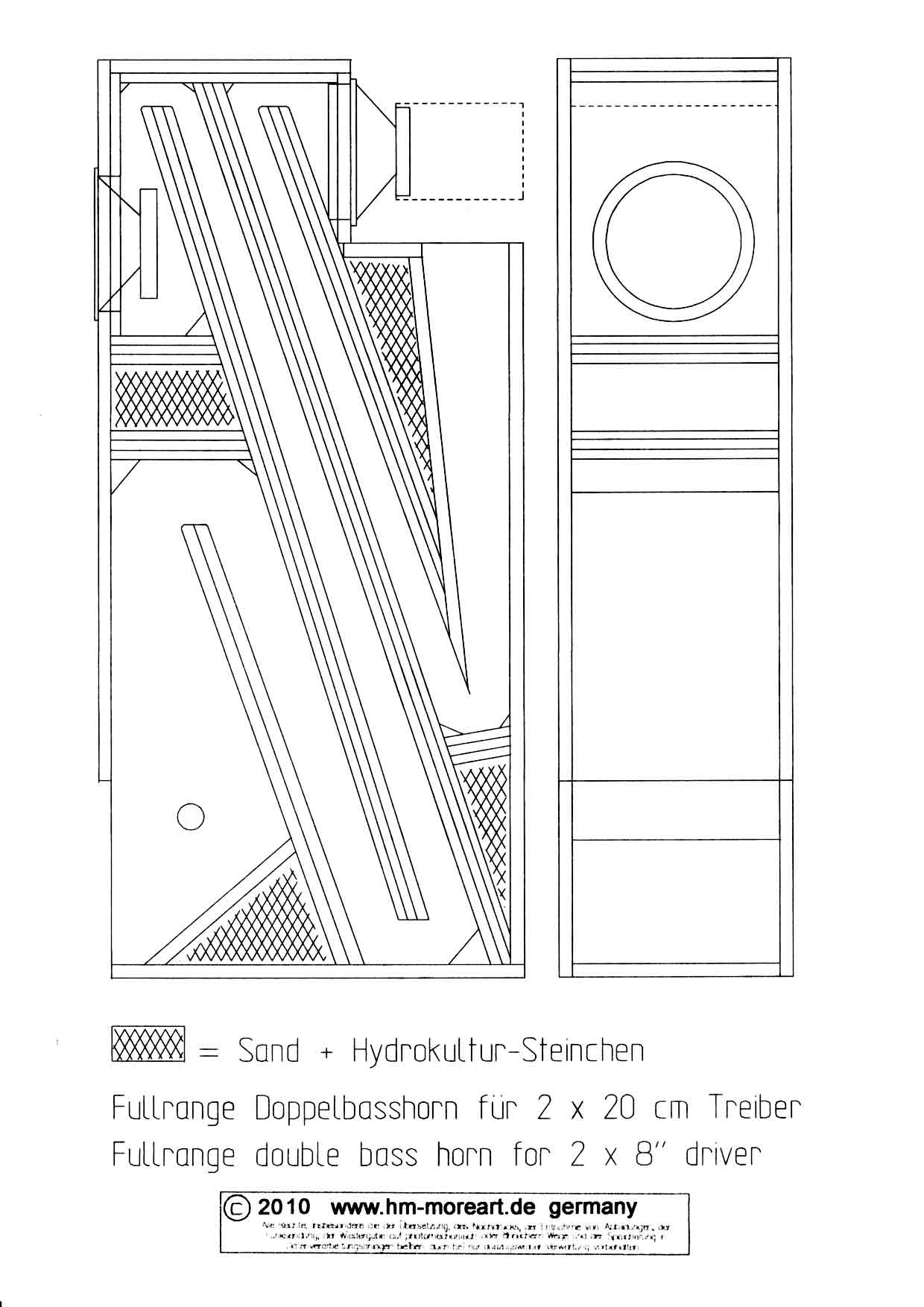
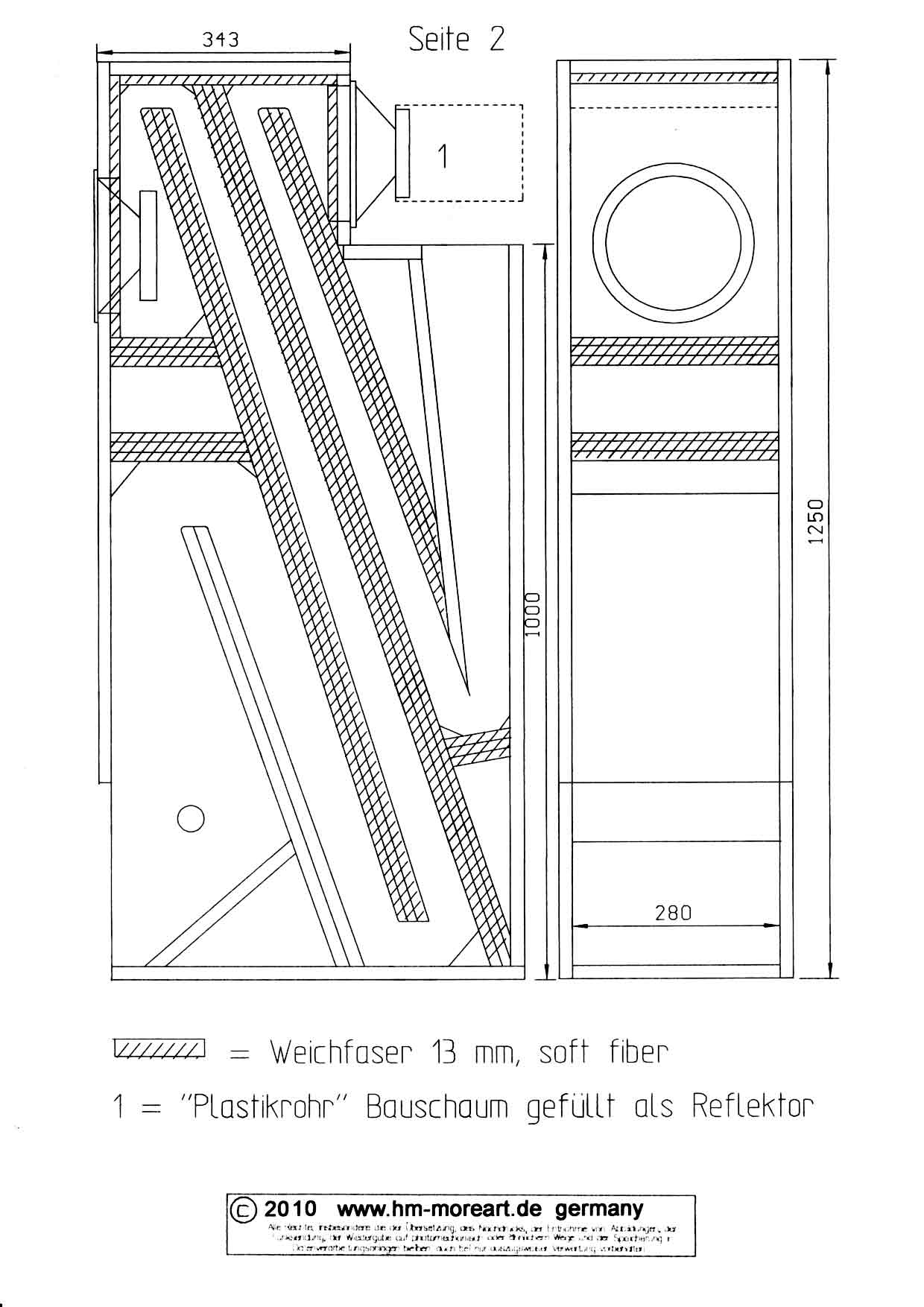
-- Horst is the creator of a wide range of backloaded horn designs, which has earned him both fans and critics. He certainly has a respectable career, with several of his designs featured in the leading German DIY audio magazines and others interesting enough to manufacturer Visaton to test in their own facilities. -- Horst prepared a piece of text for me, about the use of different materials to construct horns from. Horst advocates the use of soft fiberboard, to make enclosures with excellent internal damping. -- A new thing he put forward, was that the material dampens most sound above 200 Hz, which ensures that few higher frequencies travel down the horn. This creates a stronger crossover between the midrange (from the driver) and the bass (from the horn).-- But Horst has done more than design relatively standard backloaded horns with soft fiberboard. Since the earlier published designs, he has started to use double driver configurations, dual horns, different pathlengths to achieve smooth response in small volumes, bipole -- configurations and creative space-using concepts (like horns incorporated in seats). Very neat stuff. -- Some months ago, Horst released, which he calls the RDH20, or Rahmendoppelhorn (double frame horn) for 20cm/8" drivers. -- It looks VERY exciting and, perhaps more importantly, VERY clear now,-- Some things to note about this design: There is a forward-firing and rear-firing driver. Depending on choices of the builder, the rear driver can be a woofer or a second fullrange driver. -- The two drivers drive two different horns, of different length and expansion. The idea is that the horns have different peaks and dips and fill in each other's weak points. -- The inner horn rests on the outer section via a panel of soft fiberboard, which decouples it. Also notice how the horn mouth is wrapped around the entire enclosure. It is relatively large, yet the enclosure the driver sees is relatively small. Finally, I think it is a beautifully proportioned horn, which draws much less attention to itself than some of Horst's other designs. To his credit, and downfall, of most of his designs. He is criticized for strange and peaky/dippy response graphs, but I think they mostly show how tough it is to measure a smooth response in a room. He offers several measurements, from several drivers, measured in several positions. At the very least, the horn does bass. At best, it has response below 30 Hz. Also, he shows how the horns seems to dominate the response, not so much the driver parameters. This is something that people like Klinger also stated and Horst's measurements seem to support his. gekürzt aus: http://hornloudspeakermagazine.blogspot.com/feeds/posts/default | ||||||||||||||||||||
copyright hm-moreart Horst Möller 2009 | ||||||||||||||||||||